The first time I encountered the work of writer and director Nina Atesh was during an R&D of In League with the Devil at the Arcola Theatre in East London. And before anyone panics, R&D in theatre does not mean Research and Drinks. It means Reading and Development. Though honestly, both probably happen!

Nina Atesh
I remember being completely mesmerised.
There was something about the atmosphere of the room that evening that stayed with me long after the performance ended. Theatre can be exhausting, precarious, financially impossible, magical, frustrating, and transcendent all at once. Yet every now and then you experience one of those evenings where it feels as though something genuinely uncanny has entered the space.
This was one of them.

Promotional poster for the R&D presentation of In League with the Devil by Nina Atesh, performed at the Arcola Theatre, London, on 14 November 2025.
Nina’s play explores the life of Erik Jan Hanussen, the controversial illusionist, clairvoyant, fraudster, performer, manipulator, and self-fashioned prophet who moved through the volatile political world of 1920s and 1930s Europe. At the height of his fame, Hanussen could command crowds, transfix audiences, and seemingly bend reality to his will. Accused of fraud and placed on trial in a Czechoslovakian courtroom, he responded not with humility but with spectacle, astonishing those present and transforming scandal into celebrity. Yet behind the glamour, yacht parties, and theatrical bravado lurked a far darker story of political opportunism, ambition, and dangerous proximity to the rising Nazi regime.
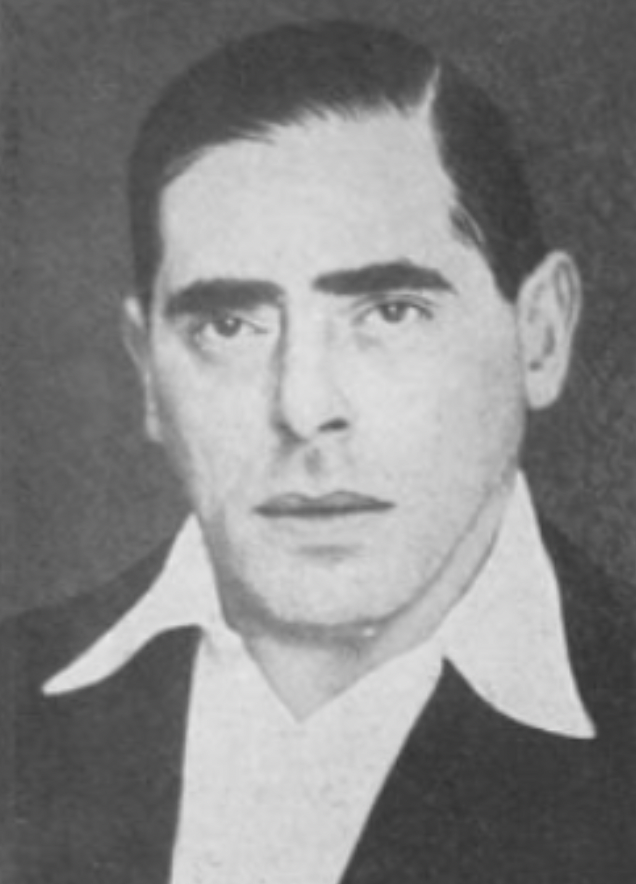
Erik Jan Hanussen, Austrian clairvoyant.
What fascinated me listening to Nina speak was not simply Hanussen himself, but the act of chasing someone through history whose entire life was built on illusion. Research becomes unstable. Facts shift. Sources contradict one another. Even Hanussen’s own autobiography appears full of embellishment, fantasy, manipulation, and myth-making. The deeper Nina went into the research, the more elusive he became.
And perhaps that is exactly the point.
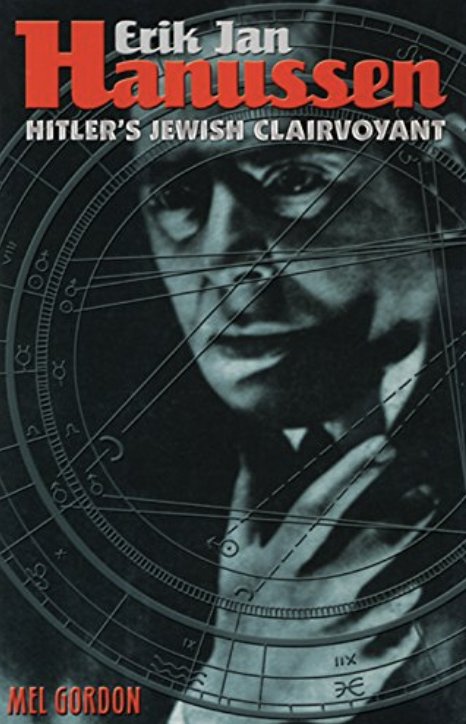
Mel Gordon’s Eric Jan Hanussen: Hitler’s Jewish Clairvoyant (2001).
What emerges is not simply a biographical drama but a meditation on truth and deception themselves. Hanussen’s life unfolded at the uneasy intersection of performance and persuasion, where audiences willingly suspended their scepticism and influence often depended upon appearances. As Nina observed throughout our conversation, separating reality from invention is rarely straightforward when the subject has spent a lifetime constructing his own mythology.
The play itself sits somewhere between historical drama, psychological horror, political thriller, séance, and magic act. During our conversation we spoke about illusionists, scammers, cult leaders, charismatic manipulators, and the strange vulnerability of people searching for certainty. Hanussen preyed upon those seeking answers, reassurance, or hope. Nina very perceptively connected this to the modern world too, where social media influencers, tech moguls, and other charismatic figures continue to shape public opinion through carefully crafted personas and relentless visibility.
One of the most unforgettable moments in the R&D involved an illusion performed live in front of the audience. I still genuinely have no idea how it happened.
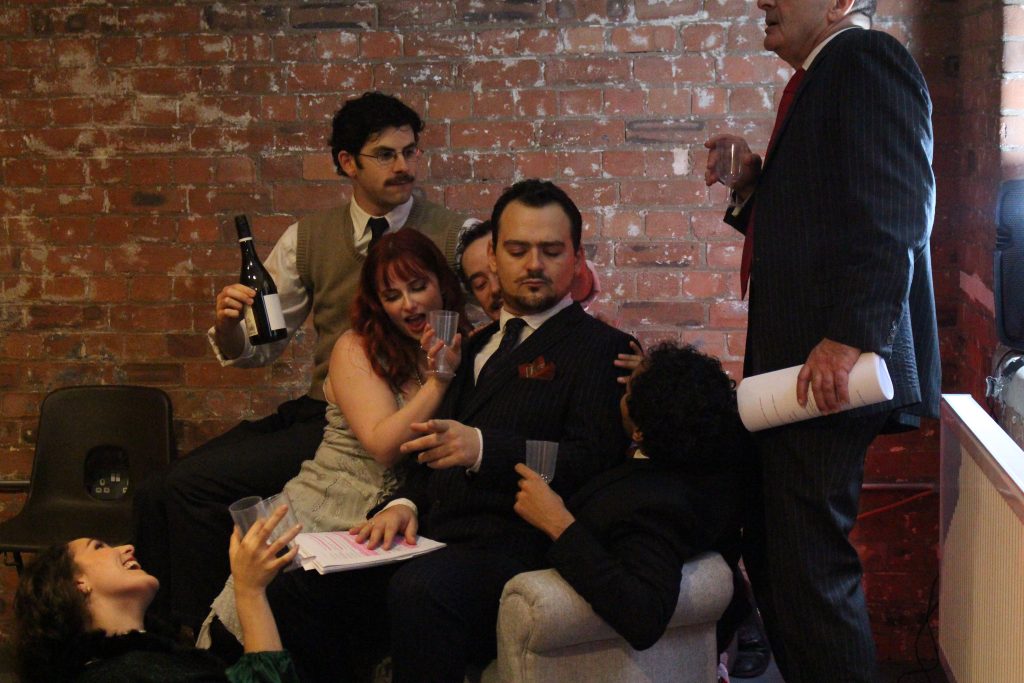
In League with the Devil at the Arcola Theatre, November 2025. Photo credit: Bethany Monk-Lane.
Nina worked with legendary illusionist Simon Drake of the House of Magic in Kennington, London, alongside mind reader Graham Jolley, to recreate some of Hanussen’s methods on stage. The result was extraordinary. Looking around the room, everyone seemed suspended between scepticism and belief. You knew intellectually that you were witnessing a trick, yet emotionally you still wanted to surrender to the possibility that perhaps something impossible had just happened.
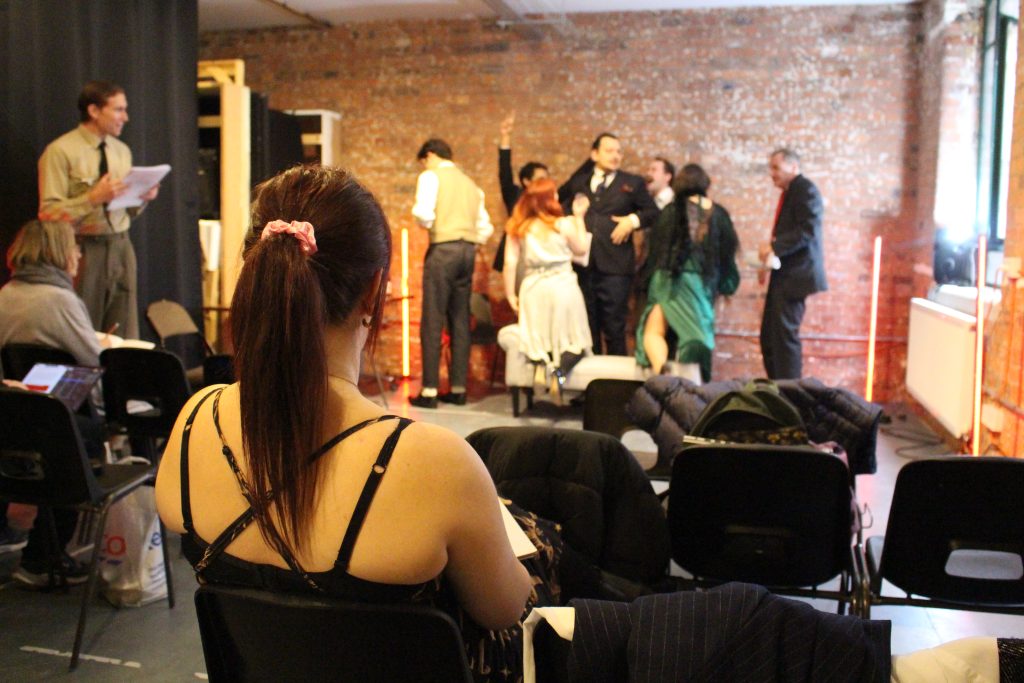
Nina Atesh, writer and director of In League with the Devil, watches rehearsals during the week-long R&D at the Arcola Theatre, November 2025. Photo credit: Bethany Monk-Lane.
That tension sits at the heart of the play.
And perhaps at the heart of theatre itself.
It felt entirely fitting that a story concerned with illusion should itself employ illusion. Were we witnessing skill, deception, psychology, suggestion, or something else entirely? The play never quite allows you to settle comfortably on an answer.
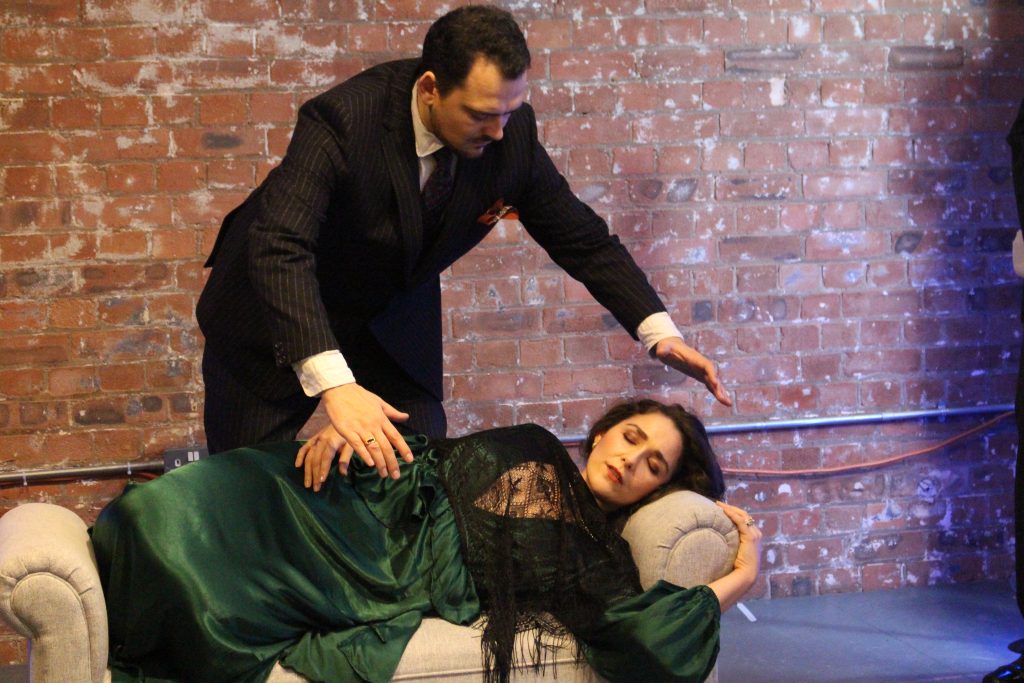
Saul Boyer and Nadia Lamin during the R&D of In League with the Devil at the Arcola Theatre, November 2025. Photo credit: Bethany Monk-Lane.
We also found ourselves reflecting on theatre culture more broadly and on what continues to draw people into performance despite the challenges facing the industry. The conversation reminded me of evenings spent watching performers in intimate pub venues, where audiences and artists occupied the same cramped rooms and anything felt possible. I particularly remember seeing Nina Conti perform in those spaces and becoming a devoted admirer of her work. There was another connection too. Conti was mentored, and for a time romantically involved, with the late Ken Campbell, one of Britain’s most inventive theatrical minds. His daughter, Daisy Eris Campbell, was a school friend of mine and has gone on to become a remarkable writer, director, and performer in her own right. Her work deserves an article of its own, and perhaps one day I shall write that deep dive. For now, the connection simply serves as a reminder of how surprisingly small and interconnected the world of theatre can be, with stories, influences, and creative lineages passing from one generation to the next.

There was another side to the conversation too because this is still A Curious Appetite, and eventually we drifted into snacks, childhood food memories, and life behind the curtain. Crisps emerged as the clear winner of the snack category, particularly smoky bacon flavour, a choice Nina defended with admirable conviction. Yet beneath the discussion of favourite snacks sat something more revealing about food, memory, and belonging. Nina spoke beautifully about growing up between cultures, between Cyprus, Canada, and England and about kitchens as spaces of gathering, storytelling, and performance in themselves.
In her Cypriot family, life revolved around the kitchen table. Aunts gathered to smoke, cook, gossip, argue, laugh, and feed whoever happened to arrive. There was always something simmering on the stove, always another plate appearing, and always room for one more person. Visits were measured not in cups of tea but in meals shared together. Around the kitchen table, family histories were retold, relationships negotiated, stories exchanged, and personalities brought vividly to life. Listening to Nina describe those crowded kitchens, it struck me that they were not entirely unlike the theatre spaces we had been discussing throughout the evening: communal worlds sustained by ritual, timing, improvisation, and a certain kind of everyday magic.
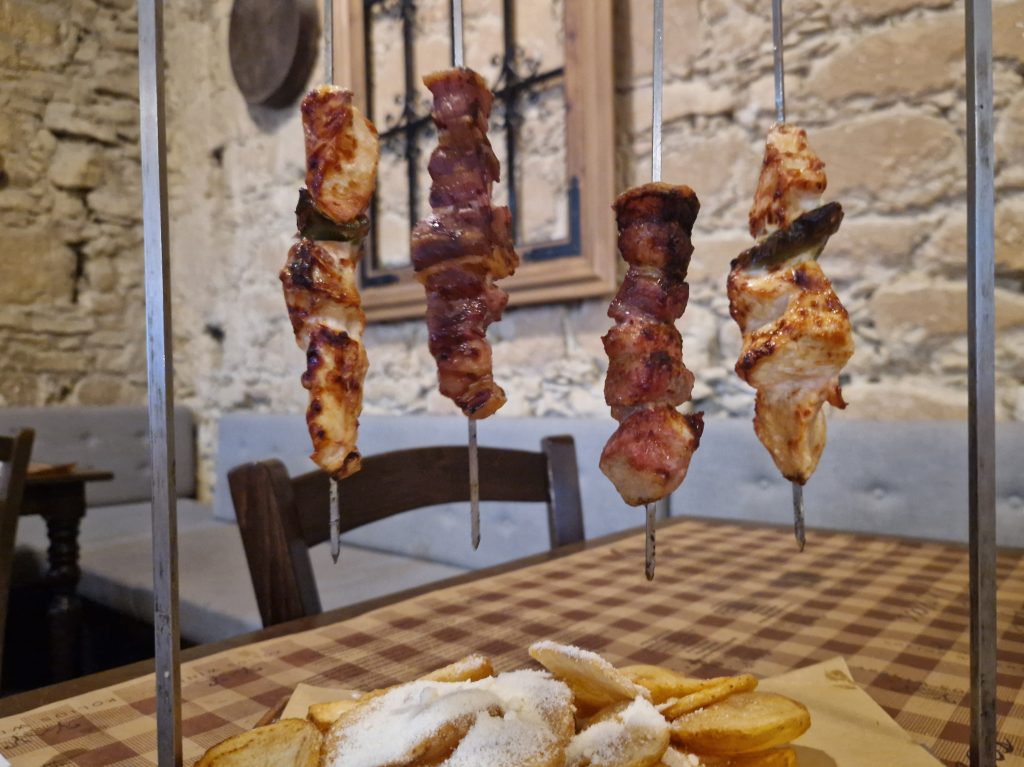
Chicken and beef souvla served with chips as part of a traditional mezze at Voreas Tavern, Oroklini, Cyprus. Image: Gerda Arendt (CC0, via Wikimedia Commons).
Memories of charcoal-grilled lamb, fresh salads, and long family meals in Cyprus sat alongside the smell of a traditional Sunday roast prepared by her mother in Kent. Both carried the same emotional weight. Both offered a route back into memory through taste, smell, and sensation. And perhaps that is what food does best. Like theatre, it creates fleeting experiences that disappear almost as soon as they arrive, yet remain vivid in memory long afterwards.
In many ways, food and theatre are not so different. Both rely upon ritual and timing, both create temporary worlds, and both disappear almost as soon as they happen, surviving afterwards mainly through memory, sensation, and retelling.

It is perhaps unsurprising that Nina handles these ambiguities so deftly. As Artistic Director of Pither Productions and co-curator of GrimFest, London’s horror theatre festival, she has built a body of work interested in psychological unease, moral complexity, and the darker corners of human behaviour. Rather than offering simple heroes and villains, her plays ask audiences to sit with uncertainty, contradiction, and discomfort.
You can listen to the full conversation now on A Curious Appetite, where we talk theatre-making, illusion, anti-heroes, magic tricks, vulnerability, psychological horror, snacks, scripts, and the strange power of performance to make us believe, if only for a moment, in something impossible.
Special mentions to Simon Drake, Graham Jolley, Kim Newman, and everyone involved with Pither Productions for helping create one of the most intriguing pieces of theatre I’ve encountered in recent years.