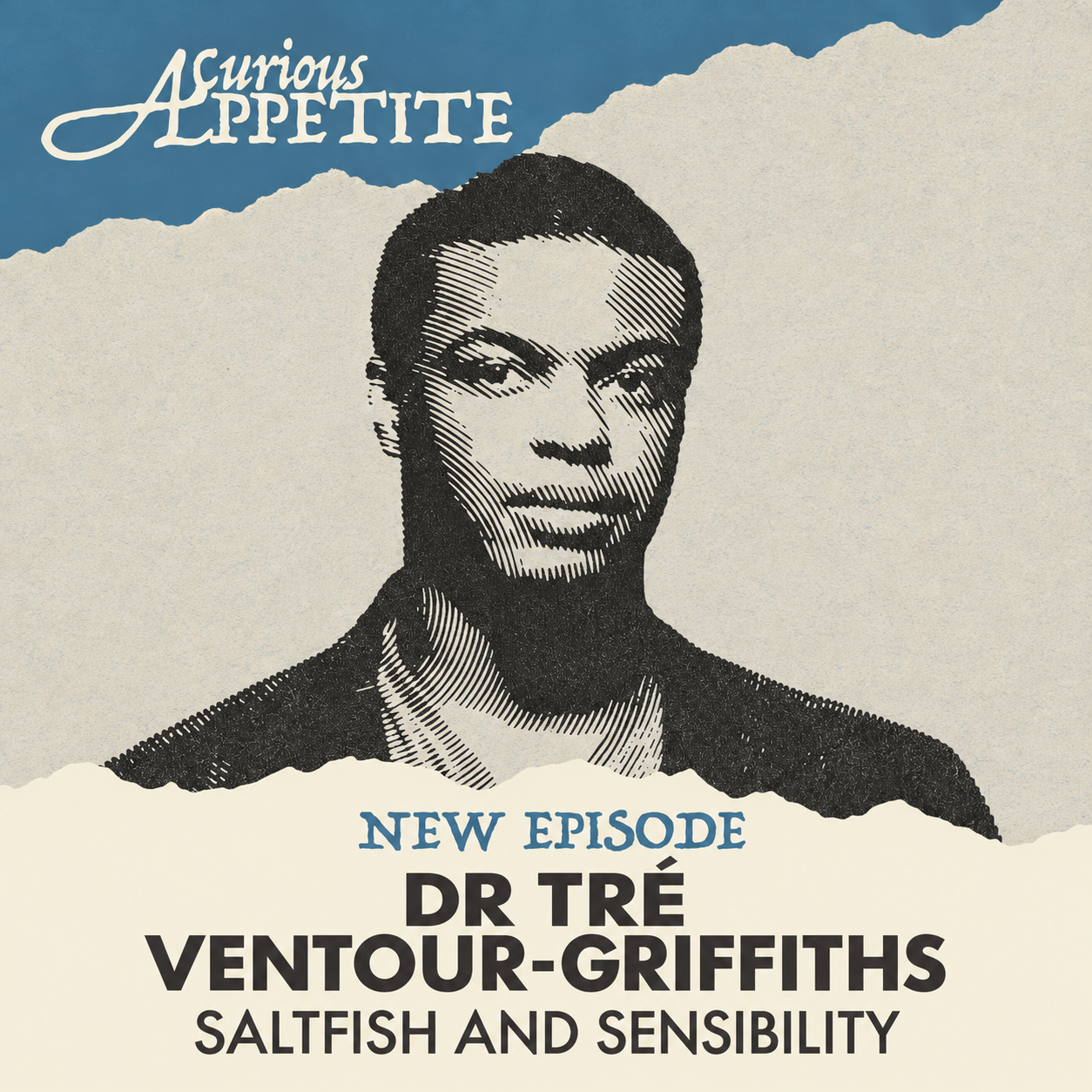
Saltfish fritters, family memory and the histories of empire that haunt our food, landscapes and favourite period dramas.
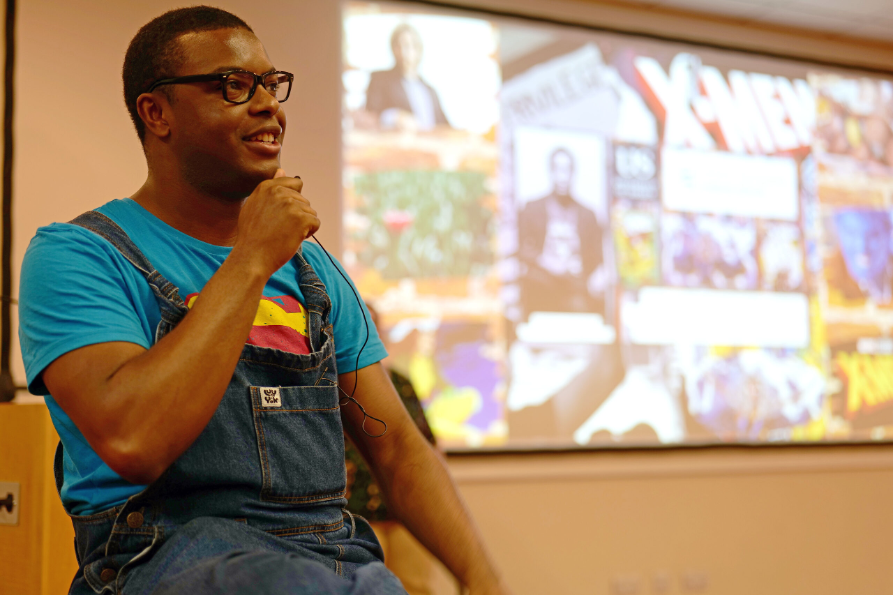
I first heard Dr Tré Ventour-Griffiths speak at Romancing the Gothic, an online project hosted by Dr Sam Hirst that brings together scholars, writers and readers to explore the Gothic, horror and the supernatural, alongside wider questions of history, culture and society. I have been thinking about that talk ever since. His work made me look again at the British countryside, at the stately homes we admire and the landscapes that appear so often in the films we love. It also left me with questions about how those places feel to different people, and whose histories we are encouraged to notice when we visit them.https://open.spotify.com/embed/episode/5N7jIkFs5BWCc7Ah6U0gqC
In the new episode of A Curious Appetite, Dr Tré Ventour-Griffiths: Saltfish and Sensibility, I finally had the opportunity to explore some of those questions with him. Our conversation begins in his grandmother’s kitchen and moves through Caribbean family histories, the Gothic, Jane Austen and the difficult business of remembering.
Saltfish and the people it brings back
Tré’s grandmother makes saltfish fritters with onions, garlic and Scotch bonnet. They are food for sharing, something to pick at while people gather and talk. As he describes them, I find myself thinking about how much of food memory belongs to the company around us: the people in the room, their voices, and the feeling of being at home.
His grandmother came from Grenada to Northampton as a child. For Tré, those fritters connect the childhood he remembers with generations he never met. They suggest the women who may have taught his grandmother to cook, and the knowledge that travelled with the family. He is careful to distinguish the cultures of individual Caribbean islands, too. The broad label “Caribbean” can conceal differences in food, language and experience that matter deeply to the people who live them.
“Family history for me is colonial history,” he says. That observation stays with me throughout our conversation. Affection and the histories of exploitation can inhabit the same dish; knowing one does not make the other disappear. We talk about saltfish, sugar and tea, and about the challenge of attending to those histories while recognising what these foods mean in everyday family life.
The futures people imagined
Before Tré encountered the academic language of hauntology, he grew up with family stories that made absent people feel present. His late aunt would tell those stories in different voices and accents. Photographs, gestures and remembered conversations gave him ways of knowing relatives whose lives preceded his own.
Drawing on Mark Fisher’s idea of lost futures, he reflects on the Caribbean migrants who imagined a temporary stay in Britain before returning home. The intention might have been five years, but family responsibilities, work and the difficulty of saving money could turn that stay into decades. The future of returning remained powerful even when it never materialised.
This is one of the parts of our conversation I found most moving. Memory reaches towards the lives people hoped to have as well as those they actually lived. Tré asks what happens when public accounts of Windrush become fixed in nostalgia, while the complexity of those hopes and disappointments receives less attention.
Who feels at home in the countryside
Tré’s account also unsettles the assumption that Black British experience must centre on London. He grew up in Northampton and went to school in the countryside, while his grandparents’ histories reach back to rural Caribbean communities. Towns, fields and family journeys belong to his understanding of Blackness.
That makes the question of belonging in the British countryside especially personal. Through his work on Black Ghost Studies, he asks how histories of enslavement continue to be felt in heritage sites, museums and country estates. We discuss haunting as a way of approaching the presences and absences that an official account of a building may struggle to convey.
Our conversation about water and memory belongs to this exploration of cultural and spiritual ways of understanding the past. The sea can be a source of food and a place through which people understand migration, loss and ancestral connection. These associations shape how a landscape is experienced, and what someone brings to it when they arrive.
Austen and the histories behind the scenery
With a new adaptation of Sense and Sensibility prompting fresh conversations about Austen, we turn to the choices made when these novels reach the screen. Tré’s concern is with the creative decisions being made now: what an adaptation brings into view, what it leaves in the background, and how it invites us to understand the world of the story.
We discuss Mansfield Park, Edward Said’s Culture and Imperialism, and the scholarship examining race and racism in Austen spaces. Sanditon takes us to Georgiana Lambe and “Pineapplegate”, including the ways an apparently decorative food can carry colonial associations into a scene and its reception by fans.
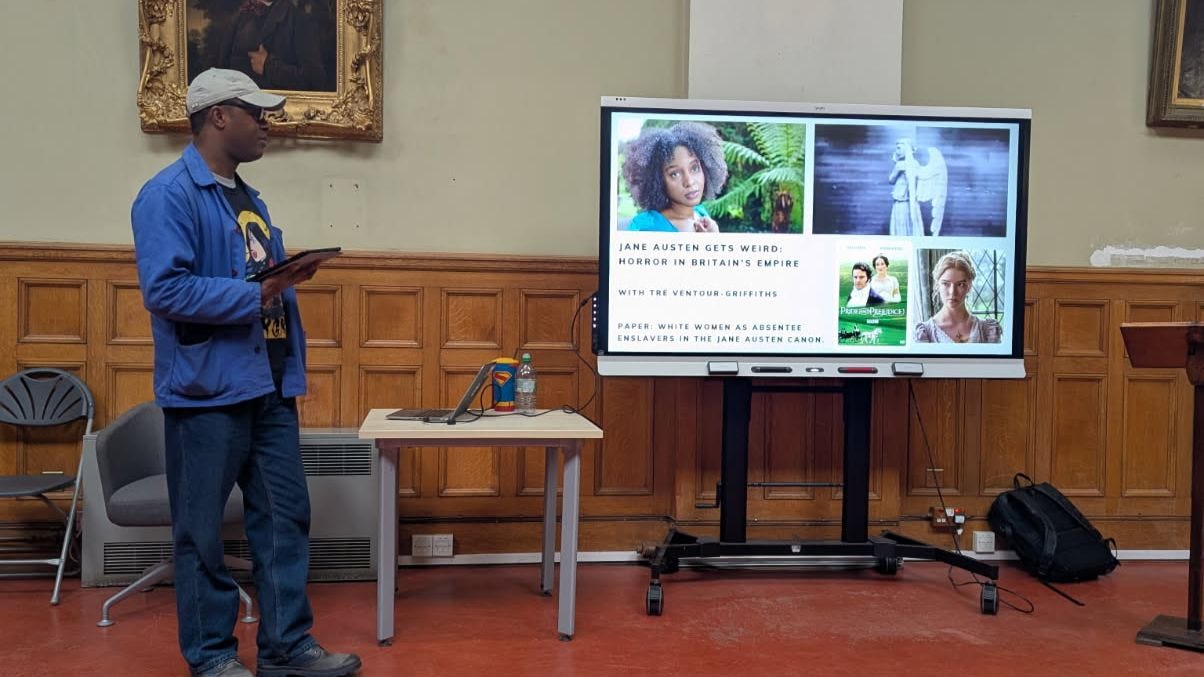
Food makes these questions particularly tangible. A pineapple on a table, sugar in a cup or chocolate served in a grand house can help make a scene feel luxurious and inviting. Following the histories of those ingredients changes what we see, asking us to consider the labour and violence behind that sense of ease.
This connects closely with my own work on dark food: the ways food carries cultural memories of exploitation, displacement and trauma. Tré and I explore how the pleasure and familiarity of eating can open a conversation about difficult histories, while also making it easier to look away from them.
The episode closes with Tré reading a passage from his creative research on Delapré Abbey. It brings together the beauty of a heritage landscape, the unease of encountering its histories, and the knowledge carried by Caribbean families. I wanted to give that writing room to be heard in his own voice.
I hope you will join us for Dr Tré Ventour-Griffiths: Saltfish and Sensibility, the new episode of A Curious Appetite. It is a conversation I will be returning to in my writing and teaching, and perhaps it will leave you looking a little more closely at a familiar ingredient, a favourite film or the next country house you visit.
References and further reading
Books, writers and theorists
· Mark Fisher, Ghosts of My Life: Writings on Depression, Hauntology and Lost Futures (2014).
· Paul Gilroy, Postcolonial Melancholia (2005).
· Sidney W. Mintz, Sweetness and Power: The Place of Sugar in Modern History (1985).
· Edgar Mittelholzer, My Bones and My Flute: A Ghost Story in the Old-Fashioned Manner (1955).
· M. R. James, discussed in connection with Mittelholzer and the ghost-story tradition.
· Edward W. Said, Culture and Imperialism (1993).
· Christina Sharpe, In the Wake: On Blackness and Being (2016).
· Saidiya Hartman, discussed in relation to slavery, haunting, archives and recovering voices from the historical record.
· Gerald Horne, discussed in relation to scholarship on slavery and imperialism.
· Delyth Badder and Mark Norman, mentioned during the discussion of poltergeists.
Jane Austen and Austen scholarship
· Jane Austen, Sense and Sensibility (1811).
· Jane Austen, Pride and Prejudice (1813).
· Jane Austen, Mansfield Park (1814).
· Jane Austen, Persuasion (published posthumously in 1817; title page dated 1818).
· Jane Austen, Sanditon, her unfinished final novel, discussed alongside its television adaptation, particularly Georgiana Lambe, race and representation, and “Pineapplegate”: the controversy involving pineapple imagery and the fruit’s colonial associations.
The following articles appear in the “Race and Racism in Austen Spaces” cluster in ABO: Interactive Journal for Women in the Arts, 1640–1830, 11(2) (2021):
· Kerry Sinanan, “Race and Racism in Austen Spaces: Eroticizing Men of Empire in Austen.”
· Amanda-Rae Prescott, “Race and Racism in Austen Spaces: Notes on a Scandal: Sanditon Fandom’s Ongoing Racism and the Danger of Ignoring Austen Discourse on Social Media.”
· Tré Ventour-Griffiths, “Race and Racism in Austen Spaces: National Trust in Jane Austen’s Empires of Sugar.”
· Bianca Hernandez-Knight, “Race and Racism in Austen Spaces: Jane Austen and Regency Romance’s Racist Legacy.”
Films, television and screen works
· Barrel Children: The Families Windrush Left Behind (2023), directed by Nadine White.
· Sinners (2025), written and directed by Ryan Coogler, starring Michael B. Jordan.
· Men (2022), written and directed by Alex Garland, starring Jessie Buckley and Rory Kinnear.
· Rebecca, Daphne du Maurier’s novel (1938) and Alfred Hitchcock’s film adaptation (1940).
· Sense and Sensibility (2026), directed by Georgia Oakley, discussed in relation to how contemporary Austen adaptations engage with histories of empire, slavery and colonial wealth.
· Sanditon, particularly its portrayal of Georgiana Lambe and the fandom discussions noted above.
· Bridgerton, discussed in relation to Regency representation and the symbolism of the pineapple.
· Doctor Who, mentioned briefly in connection with Amanda-Rae Prescott.
Other people, organisations and research references
· Charles Wootton, discussed in relation to his death during the 1919 Liverpool race riots.
· Admiral Charles Hardy, mentioned in the passage about Delapré Abbey.
· Mae Green, mentioned in the passage about Jamaican bush medicine and family knowledge.
· UNESCO’s intangible cultural heritage lists.
· UCL’s Legacies of British Slave-ownership database, including records of slave-owner compensation.
· Black Ghost Studies, discussed in relation to Tré’s PhD framework.
· Caribbean lost futures, discussed through Tré’s development of Mark Fisher’s idea of lost futures.
· Romancing the Gothic, mentioned in relation to Tré’s earlier talk.
· The Ghost Studies symposium in Ireland.
More from Tré
· Substack: Read Tré’s writing at @avidpedestrian.
· Delapré Abbey: Watch Tré’s conference paper on YouTube.
Bridgerton: Tré Ventour-Griffiths, “The ‘Whites’ Who Loved Me: How Bridgerton Facilitates Digital Lynching”, Genealogy , 2025, 9(2), 45;https://doi.org/10.3390/genealogy9020045