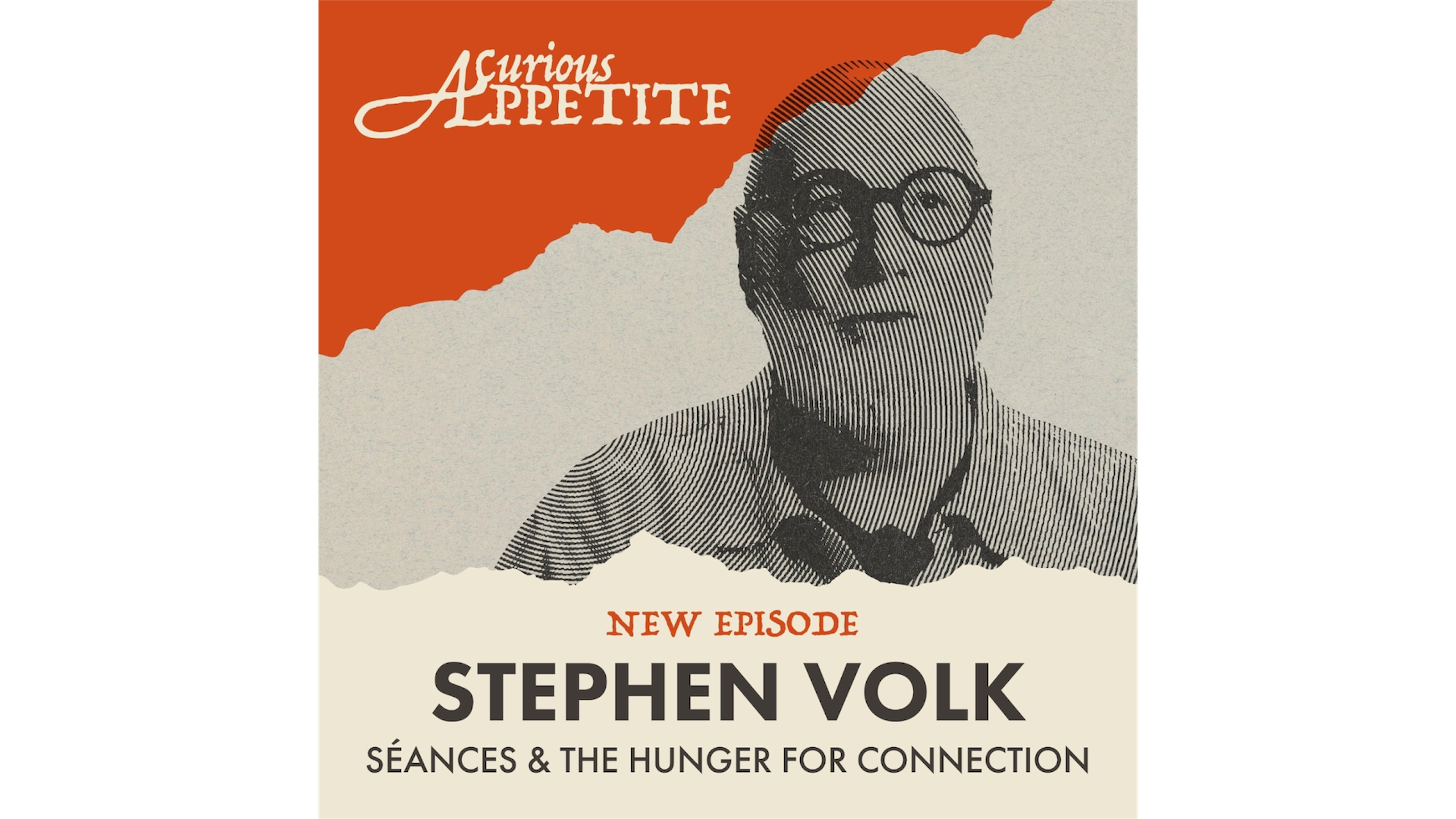
Welcome to A Curious Appetite with me, Dr Alessandra Pino. In this episode I am delighted to welcome screenwriter and author Stephen Volk, whose work has shaped some of the most memorable supernatural storytelling of the last few decades.
Volk’s screenplays include Ken Russell’s Gothic and William Friedkin’s The Guardian, while his television work includes the cult classic Ghostwatch and the brilliant Afterlife. He is also the creator of the series Midwinter of the Spirit and the writer of one of my favourite supernatural films of all time, The Awakening (2011).
Alongside his screen work, Volk writes short fiction. His recent collections include The Good Unknown: And Other Ghost Stories (2023) and The Confirmed Bachelors (2025). Part of our conversation was also published in Haunted Magazine #49, which is out now.
One moment from Ghostwatch has stayed with me since childhood. Volk reminds me in our conversation that the programme is essentially a mass séance. In one scene the poltergeist makes its presence known not only through noise and disturbance, but through something far more unsettling: a meal that is about to be eaten. The family’s mackerel is suddenly covered in a strange substance that looks disturbingly like saliva. I remember thinking, even as a child, how dreadful it was that not only were they experiencing something terrifying, but they now could not even sit down and eat their dinner.
Food has always fascinated me in horror for exactly this reason. It belongs to the most ordinary rhythms of life, and when it is disturbed the effect becomes deeply unsettling.
When I asked Volk how he thinks about horror, he offered a wonderfully simple definition: “Be careful what you wish for.” For my own part, I often explore what might be called the darker side of food. But A Curious Appetite is really about a broader hunger: a curiosity for what lies at the margins, for the unusual, the uncanny, and the strange.
Our conversation ranges across ghost stories, séances, Dickens, and the mechanics of supernatural storytelling. Volk spoke generously about Charles Dickens’s “The Portrait-Painter’s Story” and the eerie backstory that fascinated him. He also told me about his first ever film, The Last Séance.
For Volk, the séance is powerful because it occupies a threshold between what we know and what we cannot know. It carries a promise that something might answer.
He describes the engine of the ghost story as belief and doubt working together. Without doubt, he argues, there is no ghost story. The tension between the two is what generates the narrative.
What makes Volk’s approach distinctive is his insistence on normalcy as the ground for supernatural disruption. The people gathered around a séance table are not sinister figures or theatrical Gothic types. They are ordinary people, and that ordinariness is precisely why the supernatural intrusion becomes believable.
The séance borrows the familiar grammar of social ritual: a gathering, a table, a shared moment of attention. Then it twists that structure into something dangerous.
In talking to Volk, it becomes clear that séances endure not because they promise answers, but because they make doubt visible. They gather ordinary people into a room, ask them to sit still, and invite them to listen. Whether anything answers matters less than the fact that we keep asking.
In ghost stories, as in life, the séance is not really about the dead speaking back. It is about belief, grief, and the human appetite for meaning. Volk’s séance becomes a kind of narrative machine for testing reality itself. You enter the room expecting contact with the dead, but you may leave with something more unsettling: a disturbance of the living.
This attentiveness to uncertainty runs through Volk’s recent short story collections The Good Unknown and The Confirmed Bachelors. In these stories haunting emerges not from spectacle, but from hesitation, repression, and the quiet pressure of what remains unresolved. Meaning gathers slowly, shaped as much by silence and doubt as by overt supernatural events.
We also talk about food, eggs, and the curious ways everyday objects can acquire unsettling meanings within stories.
If you enjoy the episode, please share it and follow the podcast. Every listener helps these conversations travel a little further.
Subscribe to my Substack for more curious and spooky extras.